Multichannel Outreach Guide for B2B Teams
Best PracticesBy Avis Sharma · Sep 26, 2026
Learn how to build a multichannel outreach strategy across email, LinkedIn, and phone calls that boosts reply rates without overwhelming your prospects.
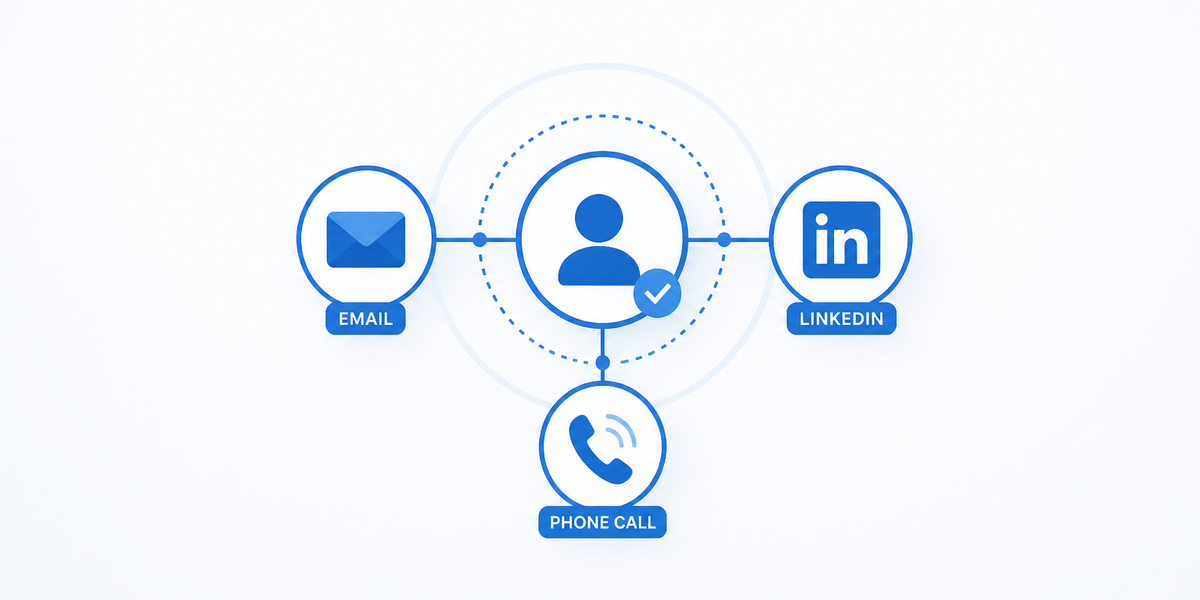
Multichannel Outreach: How to Reach Prospects Across Email, LinkedIn, and Beyond
A single cold email rarely closes a deal on its own. Most buyers need several touchpoints, across more than one channel, before they even register who you are. That's the idea behind multichannel outreach: instead of hammering a prospect's inbox alone, you spread a coordinated sequence of messages across email, LinkedIn, phone, and sometimes SMS or direct mail, so your name becomes familiar rather than forgettable.
Done well, multichannel outreach lifts reply rates and shortens sales cycles. Done poorly, it turns into a prospect getting hit from five directions in the same week and blocking you on everything. This guide covers how to build a multichannel outreach strategy that actually works — the channels worth using, how to sequence them, and the mistakes that make outbound teams look like they're stalking their prospects instead of helping them.
What Multichannel Outreach Actually Means
Multichannel outreach is the practice of contacting a prospect through more than one communication channel as part of a single, planned sequence — rather than running email, LinkedIn, and cold calling as separate, disconnected efforts. The channels reinforce each other: a LinkedIn connection request primes someone to recognize your name when your email lands a day later; a follow-up call references the email they didn't open.
This is different from simply "being on multiple channels." Plenty of sales teams have an SDR sending cold emails, a separate person doing LinkedIn outreach, and a call list nobody coordinates. That's parallel outreach, not multichannel — the prospect experiences it as three unrelated interruptions instead of one coherent conversation. Combining LinkedIn and email deliberately is what turns disconnected activity into a strategy.
Why One Channel Isn't Enough Anymore
A few things have made single-channel outreach less effective on its own:
- Inbox fatigue. B2B decision-makers receive dozens of cold emails a week. Even a well-written one competes for a few seconds of attention before being archived.
- Deliverability limits. Sending more email to push through a flat reply rate often backfires, straining domain reputation instead of improving results.
- Buying committees. Most B2B deals involve three to seven stakeholders, each with different channel habits — a VP might live in their inbox while an ops manager barely opens email but is active on LinkedIn.
- Signal before pitch. A prospect who has already seen your name on LinkedIn is measurably more likely to open and reply to a cold email that follows.
List accuracy and freshness still matter enormously for the email leg of any sequence — a multichannel approach doesn't fix a stale or bad list, it just adds more channels for the same bad data to fail in.
The Core Channels and What Each One Is Good For
Still the backbone of most B2B sequences. Email is asynchronous, scales well, and gives you room to explain value in more than a sentence. It's also the channel prospects expect to use for anything that requires a decision or a document. A well-structured 5-email sequence remains the spine that other channels attach to.
LinkedIn is where credibility gets built before the ask. A connection request, a thoughtful comment on a prospect's post, or a short direct message can warm someone up without asking for anything. It's less scalable than email and more sensitive to being overused — automating LinkedIn outreach carelessly is one of the fastest ways to get an account restricted.
Phone
Calling still works, particularly as a pattern interrupt after a couple of unanswered emails. A short voicemail referencing the email you sent earlier that week tends to outperform a cold call with no prior context.
SMS and other channels
Text messages, direct mail, and even short video messages can serve as a single high-impact touch late in a sequence, when a prospect has already seen your name several times and a more personal gesture stands out rather than feeling intrusive.
Building a Multichannel Sequence Step by Step
- Start with research, not the first message. Confirm you're reaching the right person at the right company before choosing channels — the best sequence in the world doesn't help if it's aimed at the wrong stakeholder.
- Open with a low-friction touch. A LinkedIn connection request or a light engagement (liking or commenting on a recent post) rarely feels intrusive and starts building familiarity.
- Follow with a short, specific email. Once there's some recognition, send an email that references something real about the prospect's business, not a generic template.
- Space touches by 2-4 days. Crowding channels together in the same 24 hours reads as aggressive. Give each message room to be seen on its own.
- Add a call after the second unanswered email. By this point you have enough context to leave a voicemail that references prior touches instead of a cold, generic one.
- Reserve your best channel for the close. Save a more personal touch — a direct LinkedIn message, a short video, or a well-timed call — for when a prospect has shown any sign of engagement, like opening several emails without replying.
- Stop on signal, not on schedule. If a prospect replies, unsubscribes, or explicitly declines, every channel should update — nothing is worse than replying "not interested" by email and getting a LinkedIn message the next day anyway.
Common Multichannel Outreach Mistakes
| Mistake | Why it hurts | Fix |
|---|---|---|
| Running channels in silos | Prospect gets uncoordinated, repetitive messages | Plan one sequence across all channels, not separate campaigns |
| Same message everywhere | Feels like spam, not a conversation | Vary tone and content per channel — LinkedIn should feel more casual than email |
| Too many touches too fast | Reads as pressure, not interest | Space touches several days apart across the full sequence |
| No shared record of replies | Reps step on each other or repeat pitches | Keep one CRM record per prospect that every channel updates |
| Ignoring channel-specific etiquette | LinkedIn bans, spam flags, unsubscribes | Respect each platform's norms and rate limits |
Automating a multichannel sequence is where most of these mistakes either get fixed or get worse — automation that's built around a shared prospect record prevents the silo problem, while automation bolted onto disconnected tools tends to amplify it.
Measuring What's Working
Multichannel outreach makes attribution trickier, since a reply on email might be the result of a LinkedIn touch three days earlier. A few metrics worth tracking beyond simple reply rate:
- Sequence completion rate: what percentage of prospects go through the full planned sequence versus dropping out or getting skipped.
- Channel-assisted replies: replies on one channel that came after engagement (opens, profile views, connection accepts) on another.
- Time to first reply: whether adding channels shortens the gap between first touch and response.
- Positive reply rate, not just reply rate: more channels can inflate total replies with more "not interested" and unsubscribes too — the number that matters is qualified interest.
Keeping personalization consistent across all of this at scale is its own challenge — the right approach to personalizing outreach at scale applies just as much to a LinkedIn message as it does to email.
FAQ
How many channels should a multichannel outreach sequence use?
Two to three is usually the sweet spot — typically email plus LinkedIn, with phone added for higher-value accounts. Adding more channels increases coordination overhead faster than it increases replies.
How long should a multichannel sequence run?
Most effective sequences run two to four weeks with 6-10 total touches across channels. Shorter sequences underuse the channels available; longer ones risk fatigue without new information to offer.
Does multichannel outreach work for smaller teams without a big tech stack?
Yes. A shared spreadsheet or lightweight CRM tracking which channel and touch each prospect is on is enough to start. The coordination matters more than the tooling.
Should every prospect get the same multichannel sequence?
No. Segment by deal size and stakeholder role — a senior decision-maker might warrant a call in the sequence, while a lower-priority lead might only need email and one LinkedIn touch.
What's the biggest risk with multichannel outreach?
Coming across as uncoordinated or excessive because different channels aren't sharing prospect status. A prospect who says no on one channel should never get pitched on another the next day.
Bringing It Together
Multichannel outreach isn't about adding more noise across more platforms — it's about giving a prospect several natural, well-spaced ways to recognize your name and respond on their own terms. The teams that get it right treat every channel as part of one conversation, tracked in one place, and they stop the moment a prospect signals an answer. Start with two channels done well before adding a third, and let the data on positive replies — not total touches — tell you when to expand.