There's a founder story that circulates in sales circles — a spreadsheet with over 400 "leads" sitting in it. Names, titles, companies, everything tidy and color-coded, the kind of thing that looks impressive on a slide. Revenue from that list: basically nothing. A lead by itself isn't worth much. Someone has to actually do something with it, and most teams turn out to be far better at collecting names than turning any of them into paying customers.
That gap — leads on one side, revenue on the other — is where most B2B pipelines quietly die. Not usually at the top, where prospecting happens, and honestly not at the very bottom either, where a decent closer takes it from there most of the time. It's the middle that eats everyone. The stretch where a cold name has to become a warm one, and a warm one eventually has to turn into someone who's actually ready to hand over a credit card.
Why cold leads stay cold
Mostly because outreach treats every lead the same. Same message, same offer, same timing, whether the person found you yesterday or has been quietly lurking around for six months. Kind of like proposing marriage on a first date. Technically an offer. Wildly mistimed, though.
What a cold lead actually needs isn't more pressure. It's context. They don't know you yet, and there's no reason for them to believe whatever you're selling actually fixes their specific problem. Jump straight to "book a call," and you've skipped over basically everything a person needs before agreeing to anything.
It's not one kind of "cold"
Not every cold lead is cold for the same reason, and treating them like they are is where a lot of this goes sideways. Someone who grabbed a whitepaper six months ago and then vanished is cold because life got busy, or the timing was off, or the problem just wasn't urgent yet. Someone who's never once interacted with your brand is cold for a completely different reason — they don't know you exist. Different problems. Different first moves, too.
For the first group, the ones who went quiet, showing up again with something new usually does the trick. Not "just checking in," which somehow manages to say nothing while asking for nothing useful at the same time. Give them an actual reason to look twice — a relevant case study, a fresh angle on whatever they originally cared about, or genuinely useful content with no ask attached whatsoever.
The second group is trickier. You're not re-engaging anyone there; you're introducing yourself, which means earning attention before you've earned a reply. Lead with a pitch, and it gets deleted more often than not. Lead with something specific to that one person instead — a recent post, a change at their company, a problem you noticed they're probably dealing with — and the odds shift quite a bit.
A reply is not a yes
Here's the part that seems to get skipped constantly: the space between "this person replied" and "this person is ready to buy." A reply isn't a yes. Half the time it's barely even interest — plenty of the time it's just someone being polite. Deals die right here more often than people want to admit, because a rep sees a reply, mistakes it for momentum, and jumps straight into a pitch or a demo request before the prospect has even decided the problem's worth solving in the first place.
What works better, usually, is treating that first reply as the opening of an actual conversation rather than the finish line. Ask what's really going on for them. Why now, if it even is a "now" yet? What have they already tried, and why didn't that work out? People buy because they believe a problem is worth solving and that you're the one who can solve it. Not because a rep hit send on schedule.
This is also where personalization does most of its work, and where it's hardest to fake. A generic case study is fine, sure, nothing wrong with it. But a case study that maps almost exactly onto someone's own situation — same industry, same size, same problem they mentioned in passing — lands completely differently. That takes real attention to what someone actually said. Not a template with a name dropped in at the top.
Why one message is never enough
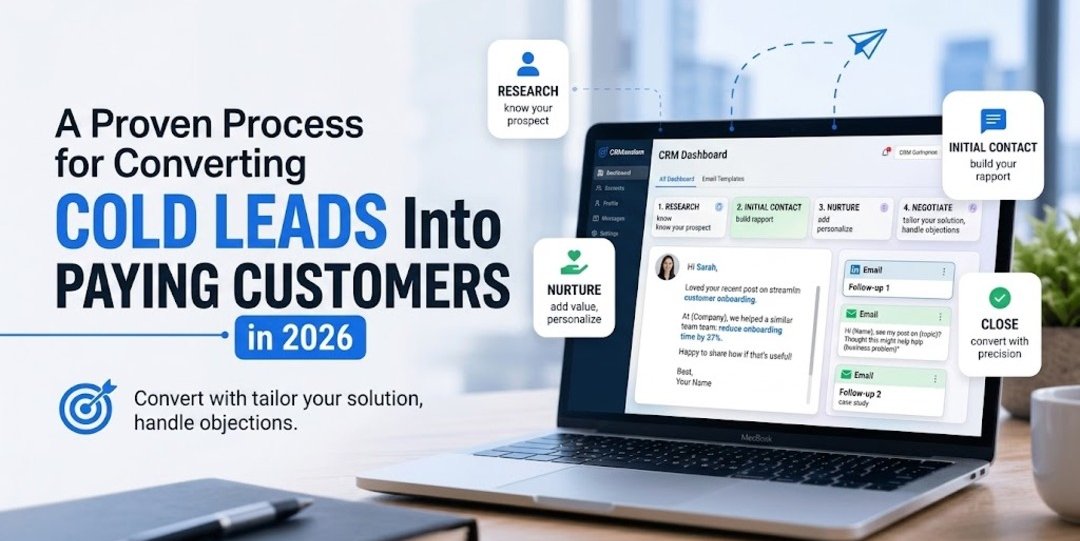
Cold leads rarely convert off a single message, no matter how good it is. It usually takes several touches, spaced out, each doing a slightly different job. The first one gets attention. The next builds a bit of trust. Somewhere in the middle, one of them has to quietly deal with the objection nobody's said out loud yet — price, timing, whether this is even the right priority right now.
Spacing matters just as much as what you actually say. Too tight together and it starts to feel like pressure. Too spread out and whatever momentum existed has already evaporated by the time the next one lands. Most B2B sequences fall somewhere between three and seven touches over a couple of weeks, mixing LinkedIn and email so it doesn't feel like the same pitch wearing two different outfits.
Where it falls apart at scale
All of this is manageable for a handful of leads. A rep can genuinely keep track of what twenty people said, what's worrying them, when to follow up, what to send next. Try doing that for three hundred, and the wheels come off pretty fast. People fall through cracks. Follow-ups get missed. Personalization quietly turns into copy-paste, mostly because there aren't enough hours in a day to actually do it right for everyone on a list that long.
That's the real problem with converting cold leads once you're past the early stage — not that the strategy is unclear, but that doing it consistently at real volume is genuinely hard by hand. Someone has to remember who said what, who's overdue for a touch, who went quiet and needs a different angle this time around. Miss that, and leads that were actually warming up just go cold again, quietly, and nobody notices until the pipeline number looks bad at the end of the quarter.
This is roughly where a tool like DoReach earns its keep. Not by deciding what to say or when a lead is genuinely ready — that judgment call still needs a person, always will — but by making sure the tracking and sending never become the bottleneck. Who replied, who's overdue, which sequence someone's actually sitting in — all the bookkeeping that eats a rep's day without moving a single deal forward gets handled quietly in the background, which frees up the hours for the conversations that actually matter.
Knowing when to let go
Not every cold lead converts, and honestly, that's fine. Treating every non-response as "needs one more follow-up" eventually just annoys people and burns your name with them. If someone's been through a full sequence — a handful of genuinely different touches, real value in each one — and there's still nothing back, it's usually fine to let it go for now. Note the likely reason if you can guess it, tag them for a re-engagement push down the line, and put that energy toward leads actually showing some signs of life.
That's arguably the more useful skill in all of this anyway — figuring out which leads deserve a real, sustained effort and which ones just haven't hit their moment yet. Chasing everyone equally hard isn't attentiveness. It's just noise with slightly better manners.
What's worth exploring next
A natural next question is timing — how do you actually tell a cold lead has warmed up enough to move from a nurture sequence into something more direct, without jumping the gun and pushing someone who isn't ready? Worth its own post, too: what a genuinely good first-touch message looks like on LinkedIn versus email, since what earns attention on one rarely translates cleanly to the other.